Three places web3 advertising is broken
Your campaigns could be doing better than you think.

We've all felt the frustration when you think a campaign is working...
People are posting and quoting your product, activity looks good. But then you look at the numbers that really matter: new users, returning users, transactions and volume, and they’ve barely budged.
If you've spent any time in crypto marketing, you know this is very much a reality for us. We mostly know what needs doing. We've just never really had the tools to see whether any of it actually worked.
We didn't start off as marketers, so for us it was a hard-knocks education. After a lot of trial and error, we found marketing breaks down in three specific places.
One - web3 users don't click links
This is a tech-savvy, scam-aware audience, and the first (and probably the most frustrating) break happens here: they just don't click ads that much.
You can't blame them. It's basically the first rule of crypto that everyone learns.
Think about how a crypto-native person moves around. All day long they're on CT, in their communities, through explorers, and on dapps, and often with multiple wallets, each for a different purpose.
When they come across something interesting, they rarely (if ever) click the link. They’ll remember the name or offer, and when the time comes, maybe a day or two, or even a week later, when they have a reason to care, they'll find their way there. That’s when the conversion happens.
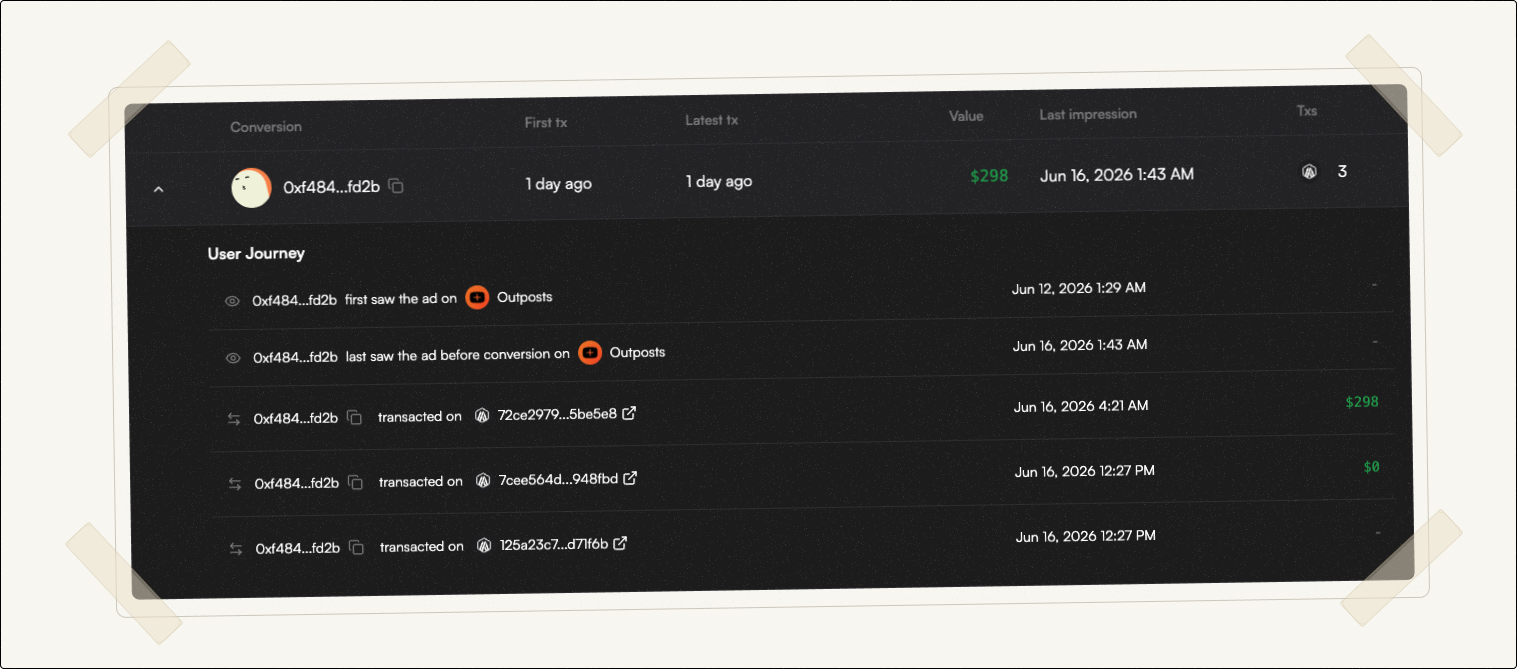
It's not great, but there's no click anywhere in that story for your analytics to grab. And because most of our attribution methods are web2 based, they're still built on impressions and clicks.
But without the click, there's no record.
So even if you're getting conversions that your campaign drove, it's hard to prove they came from the campaign, and even harder to know what's working and what isn't.
There’s just no viable solution for this using the old approach. It’s a tracking gap that pixels and UTMs can’t close. Cookies don't survive the hop between wallets, and fingerprinting doesn't last past devices.
These are methods we don't want to use anyway, because they completely destroy privacy.
The way out is to stop chasing the clicks and watch what you can actually see: what's happening onchain.
Tie an impression to a wallet, then follow what that wallet goes on to do, click or no click. It’s called view-through attribution, and the good part is that it asks nothing of the user. No cookies, pixels or consent requirements.
Unfortunately, the second break comes straight out of the first.
Two - what you choose to measure
Most crypto marketers are good at their job, which is why this second break is so frustrating. The numbers you can produce are impressions, likes, shares, and follower count, and those are what you end up putting forward when someone wants to if the campaign worked.
They look good, but they don't really tell you anything about revenue, the bit that matters. Even when you have all the others, you're still not able to say whether the campaign actually grew the protocol.
What you'd really want to answer is whether people who'd never used the protocol started, and whether the ones who'd gone quiet came back. And then the real test: can you put that down to the campaign, or was it going to happen anyway?
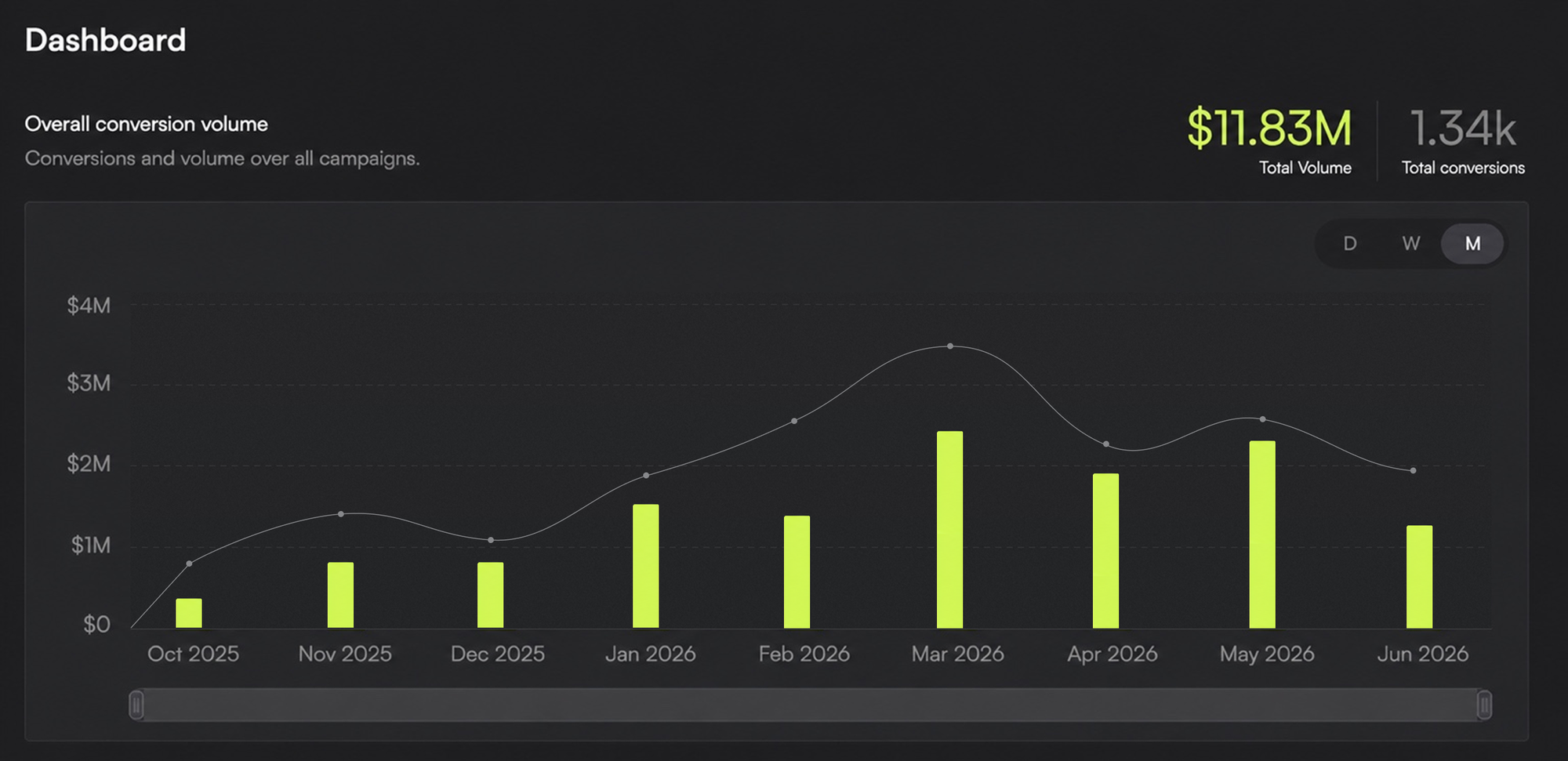
That last bit is what incrementality means, and it's the one thing worth bringing into a budget conversation, because everything else can be true while the campaign did nothing.
The catch is you can't properly measure any of it through clicks, for all the reasons in the first break. But you can measure it onchain.
Same fix: attribution that follows wallets rather than clicks.
Now you can see the new wallets that started transacting, the dormant ones that came back, and line them up against what was already happening before you spent anything.
That's a real baseline, and it's what lets you talk about what's working and what's not with a verified number, instead of wishful thinking.
The last break comes down to...
Three - money.
And specifically: what are you paying for? In web3, it can go one of two ways.
Either you pay up front for impressions: a flat CPM rate, whether or not any users show up, and whether or not you get any real conversions. It dumps all the risk on you.
Or you skip ads altogether and you pay people to show up directly: points, quests, airdrops and referrals, or indirectly through KOLs.
The trouble is, that the moment there's money behind an action, the people who come running are the ones who are there only for the money. You get very good at attracting wallets that vanish the day the rewards stop.
Neither of those is buying you growth. One's buying you exposure you can't measure; the other's buying you mercenaries.
What you want sounds obvious, but turns out to be quite rare: only paying when something real happens.
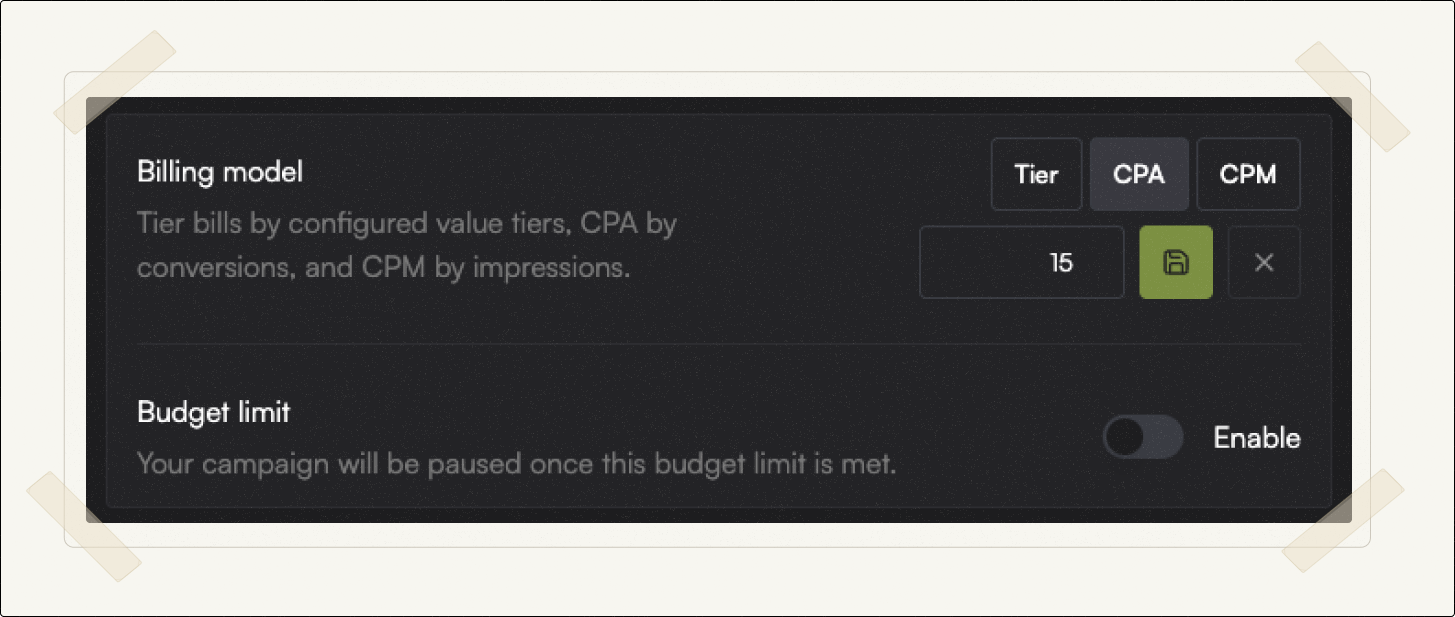
None of them are easy to fix on their own is that they're really one problem seen from three sides.
You can't measure conversions you can’t properly see. And you can't pay on performance when you've got no way to verify it.
We've spent the last few years building on the other side of all three: attribution that reads the chain instead of the click, measurement that counts real people instead of noise, and pricing that only bills when it works.
The W3A hub is where we think out loud about all of it: what's working, what's not, and what a better standard could look like.
If your dashboard's ever looked great while your product sat empty, you'll feel at home here.
Was this forwarded to you? Subscribe free to get the next article in your inbox.
Wayne Hattingh — Always learning, never bored. Partnerships @TICC