50+ campaigns and everyone's first ask is new users. It's not where volume comes from.
Your most valuable users already left once.
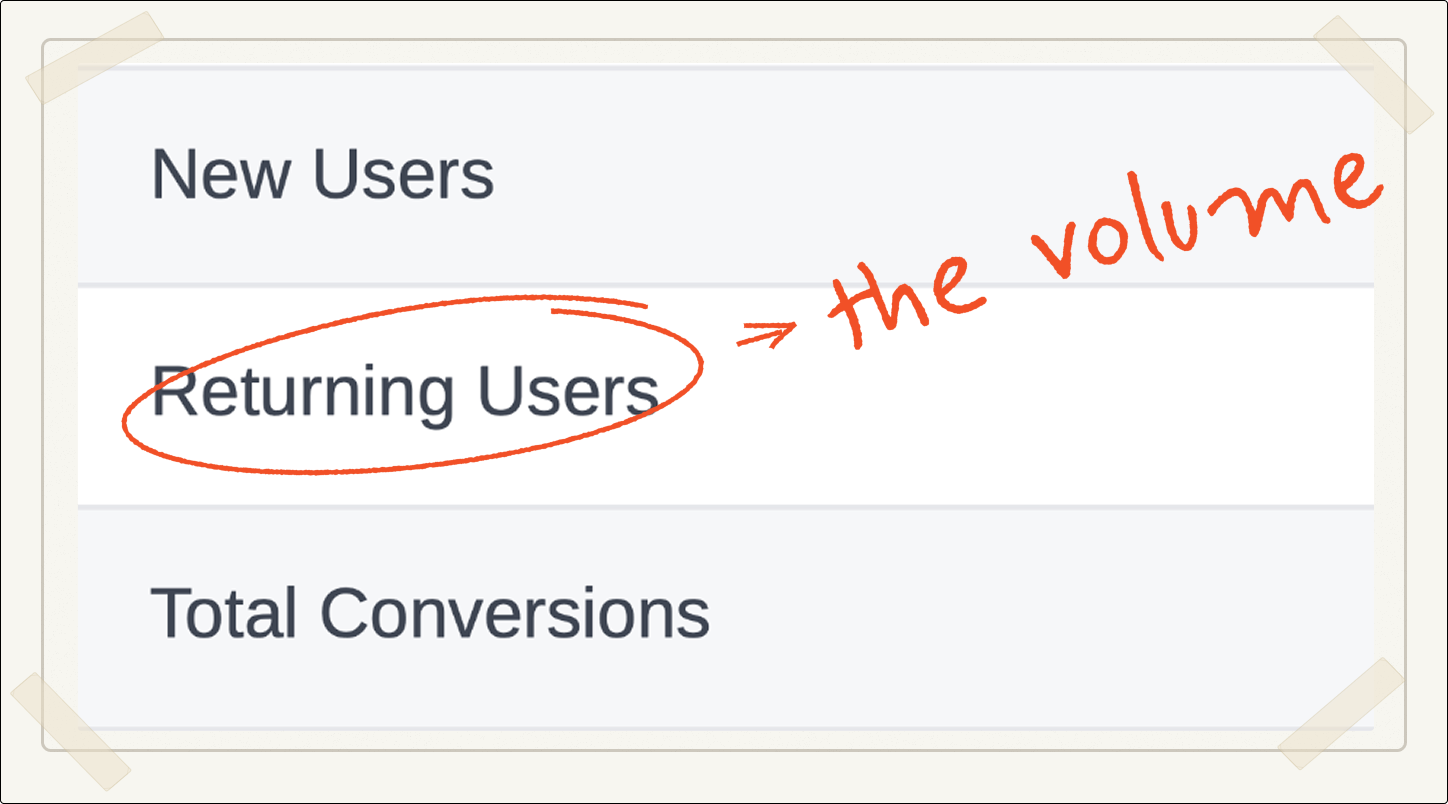
Every campaign we run, we get the same answer when we ask about the campaign goals: new users. Fair enough, because new users are growth, and growth is the job.
But once the report comes in after the campaign, the first thing everyone wants to talk about is volume. How much came in, where it came from, and then what did it cost and whether it was worth it or not.
The thing is, those two kind of work against each other more than most teams realise.
When we break down where campaign value actually comes from, over and over, the users bringing the most volume aren't the new ones. They're the reactivated ones. The people who used the product, then drifted away, and eventually stayed gone, but then came back through the ad.
It isn't surprising once you look at it. A brand-new user of a DeFi product starts small. They're testing you with amounts they can afford to lose, and because we suffer from shiny object syndrome in crypto, there's also a decent chance they churn before they ever scale up.
A reactivated user is a different animal. They've already tested your product and liked it enough to convert on it twice. And like Wayne said, if your product is still around six months after they left, that does a lot of trust work on your behalf. So a user coming back is a second conversion and a vote of confidence.
Leaving is easy in web3. So is coming back.
This is very specific to web3, and it's because nobody decides to stop using a bridge or a DEX. There's no cancellation process, no account to close.
They just see something new, give it a try, and before long, are so far removed from your product that they've just used something else last time, and then the time before that.
Moving funds around in DeFi is barely a decision for most users, especially for the most valuable ones. Compare that to web2 finance, where switching banks is a genuine life event, and a user who's gone is usually gone for good.
The good news is that this cuts both ways. The same low friction that lets users drift away is the same easy path back. There's no big decision in coming back.
Reactivation still takes effort, but it’s worth it. You just have to meet them where they are, earn their attention again, and remind them why you mattered.
What the report actually says
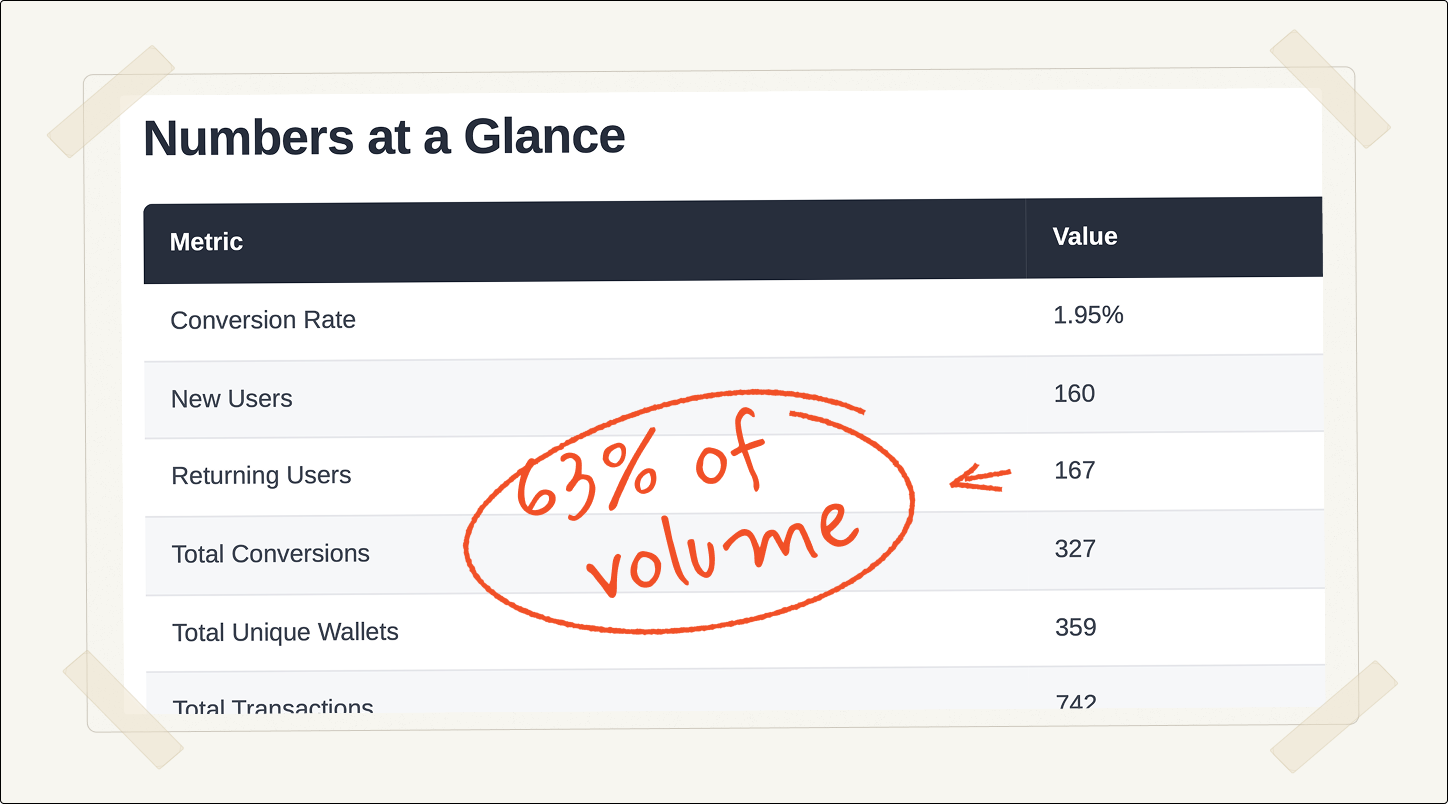
Our reports lead with the conversion rate, and the next two lines are new versus returning users. That third line gets a negative reaction surprisingly often. Too many returning users reads like the campaign failed at its job.
Then you break it down further, and the facts come to light. In the campaign above, 63% of volume came from users who have been inactive for months, while new users cost a multiple of the value they created. From what we've learned you cannot say that reactivated users are worth less.
Madusha framed it like this: a lot of it is just scale. Once a protocol gets big enough, almost everyone in DeFi has taken it for a spin at least once. At that point, “new user growth” stops being a meaningful north star.
Of course, you never shutter the acquisition channel; today's new users are tomorrow's regulars, but the focus shifts to retention: keep the users you’ve got, and win back the ones who drifted away.
One thing to keep in mind when reading your own reports: returning users aren't a single category.
Someone dormant for six weeks might just be having a flat month or two and may come back on their own. But someone gone for two hundred days? It's safe to say they have genuinely left.
Both cases are still reactivations but could be worth very different amounts, and you should not be lumping them together. It weakens the data by hiding insights in a single number.
So what we're telling our customers goes something like this: I know you want to see the big new-user number, and even though they matter, volume is where the revenue is and reactivated users are where your volume is coming from.
There's one condition attached, and it isn't small: all of this only counts if you can prove the ads caused those returns rather than it being something that would have happened anyway. You do that by measuring lift to demonstrate incrementality, but that’s a post for another day, so I’ll leave that thread hanging…
Anyway, the goals conversation is a very important one, but you should always ask why and dig a bit deeper to see what it is you're really after. New users are a given, but volume usually pays the bills.
Curious what a full report looks like? Download a sample here
Was this forwarded to you? Subscribe free to get the next article in your inbox.
Ross Neilson — Cofounder of TICC, building Specify, Outposts, Maru and of course W3A. Website