Killed at the bottom
How to defend a good campaign when the numbers say otherwise
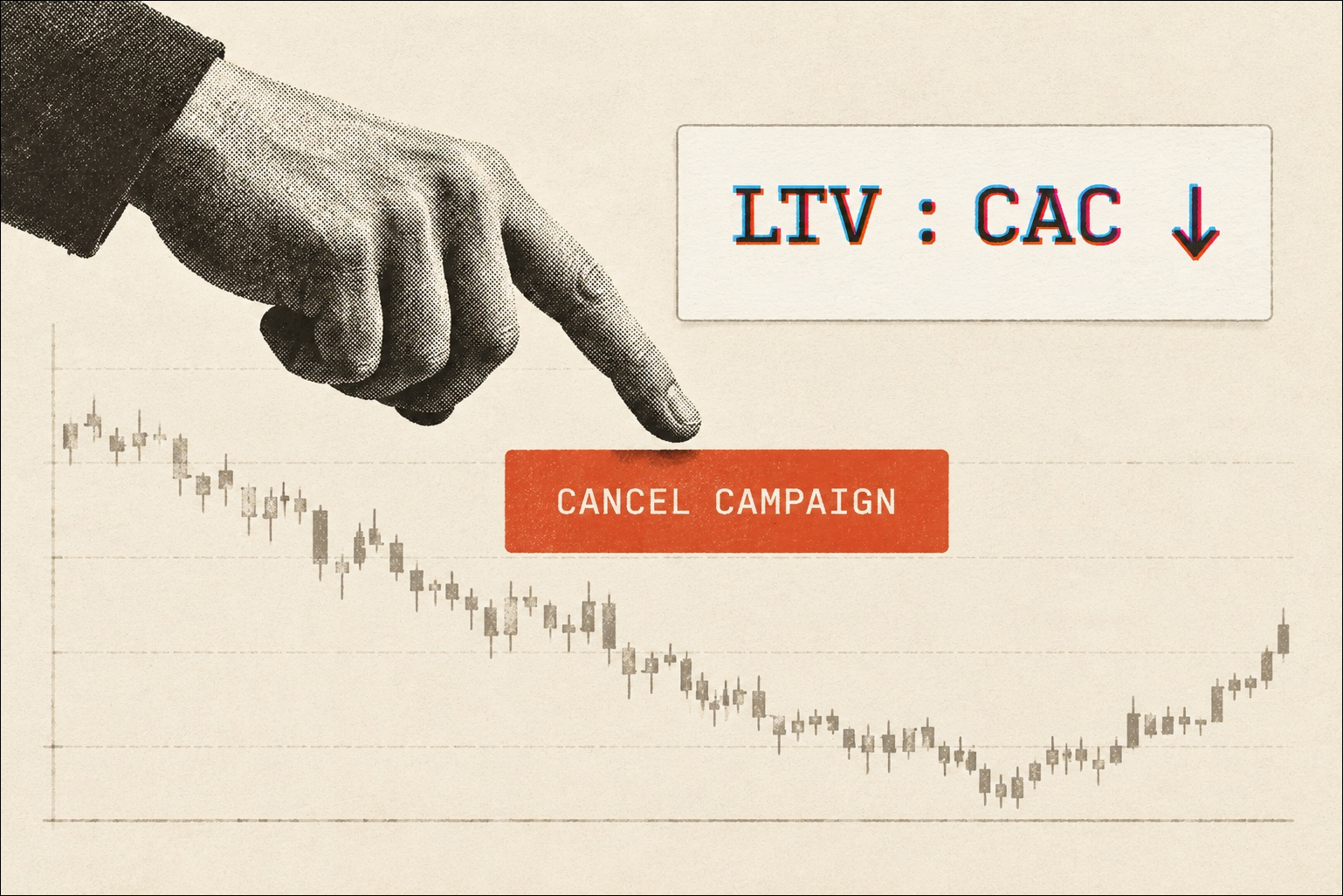
Take two reports for the same campaign. Same targeting, same creative, same publisher placements, users behaving the same way. One report is from a year ago when the market was pumping, and the other from last month, with the market in the toilet.
The ROI numbers can look completely different, but both reports are correct. The difference is the market each one ran in.
Most of what we measure in web3 campaigns is denominated in volume.
A user's lifetime value is basically the value of what they transact. So if your users trade in ETH, and ETH is at around half of what it was a year ago, an identical user doing identical trades produces half the LTV on paper. The campaign didn't decay, but the unit it's measured in did.
Ross raised this on our call and said that marketers see this and still don't adjust for it, because adjusting feels like blaming the market. It sounds like a cop-out, and nobody wants to stand in front of their boss with excuses. I get that.
But the adjustment is not an excuse. It is the baseline, and reporting without it is just another vanity metric.
We measure to see the real result, good or bad. Baseline it and the number gives you actionable data about your campaign. If you skip that then it's basically just tracking the ETH price.
Say your user inflows grew 10% last quarter. Is that good? I have no idea, and neither do you, until you put it next to what your chain did.
If the chain grew 30% over the same period, you lost ground while your chart still went up. Hold flat while the chain shrinks 20% and you've actually taken share in a downturn, which is hard to pull off.
That 10% on its own tells you nothing. Line it up against the market and it does.
|
Free tool · for subscribers
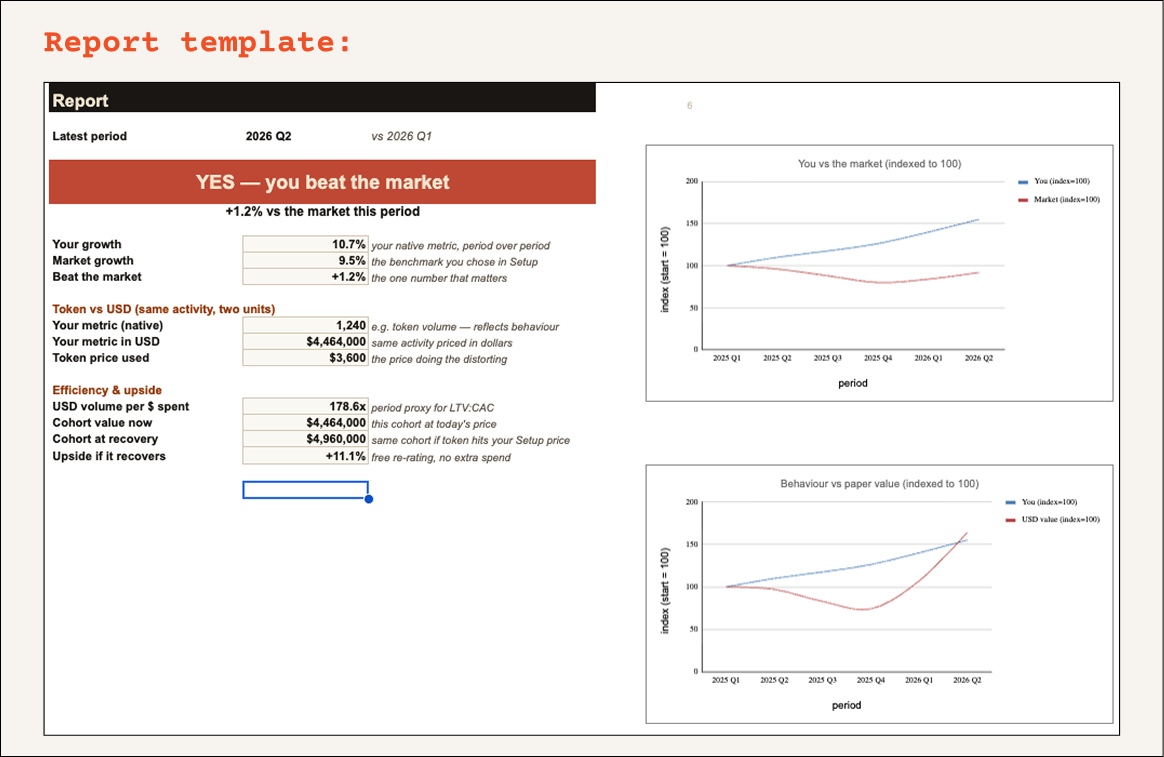
The Beat-the-Market Report
The spreadsheet from this piece: token vs USD, beat-the-market, and cohort upside.
Subscribe free to download →
Free with a subscription, along with every issue. One email a week on growing web3 products. No noise.
|
Web2 sorted this out a long time ago. Nobody reports e-commerce revenue without adjusting for seasonality, because a toy shop that's flat in December has a problem while a toy shop that's flat in February is fine.
Crypto has seasons too. Ours are just far more brutal, and they don't follow the calendar.
The fix costs nothing: put the token amount next to the dollar amount. One ETH is one ETH. Even if its dollar value halved, the user traded exactly the same. The dollar line only tracks the market. Watch the token line to see whether anything real changed. Show both, and nobody mistakes a price move for a change in behaviour.
This cuts the other way too. The user you acquire in a down market is cheap, and their LTV is marked at down-market prices. But if your product is sticky and the market recovers, their lifetime value surges without you spending anything more. Someone trading a couple of ETH today is worth double on paper the day ETH doubles.
Which means a bear market is when market share is cheapest to get, if, and this matters, if you have the runway to wait for the upturn.
If spending through a downturn puts you near zero, none of this applies to you. This is a strategy for teams with healthy budgets and patience, not a reason to burn reserves.
The last thing Ross kept coming back to was the person who signs off on the budget. Everything above only works if they understand it.
LTV to CAC will look worse as the market falls, and that happens whether the campaign is good or not. If your CFO or your founder reads that ratio without the market context, a working campaign could get axed, even when it's actually converting at a cheaper rate.
So part of the marketer's job, maybe the hardest part, is telling that story to the people holding the money before they read the ratio.
A report should answer one question: did you beat the market this period?
Was this forwarded to you? Subscribe free to get the next article in your inbox.
Madusha Thilakarathna — Co-founder @ TICC. Building Specify, Outposts, Maru and W3A. Website